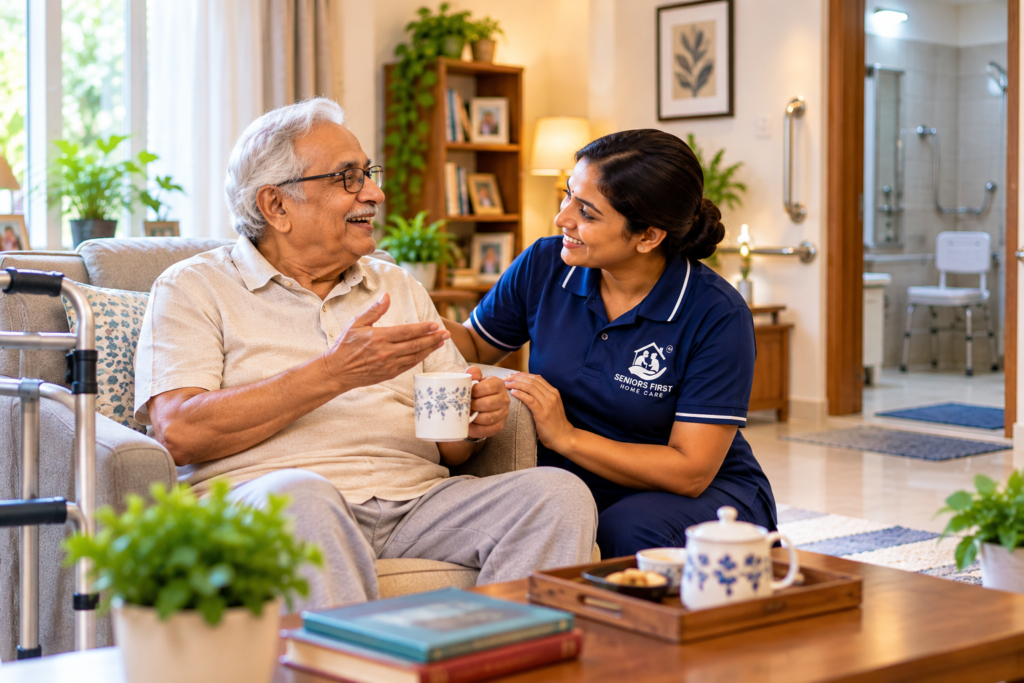
Do you have elderly people at home? If yes, this is something you should not ignore.
As people grow older, changes in physical strength, mobility, balance, vision, and daily activities can make certain tasks more difficult.
For this reason, when elderly family members are at home, it is important to pay attention not only to their physical needs but also to their emotional well-being.
Spending some time with them, checking on their needs, and making sure they have the right support can make a significant difference in their safety and quality of life.

Why Should You Regularly Check on Elderly Family Members?
Older adults may not always need physical assistance. However, knowing that someone is available to check on them and help when needed can provide a sense of security.
Take some time during the day to check:
Bullet list:
- Have they eaten?
- Have they taken their prescribed medicines?
- How are they feeling today?
- Are they experiencing any pain or discomfort?
- Did they sleep well?
- Do they need any assistance?
Regular check-ins can also help families notice small changes in their health or behaviour at an early stage.
Loneliness Can Also Be a Concern
Elder care is not only about physical health. Emotional well-being is equally important.
Family members may be busy with work, business, and other responsibilities, which can sometimes reduce the amount of time they spend with elderly parents or relatives.
Even spending a few minutes talking with them, listening to their concerns, or asking about their day can provide valuable emotional support.
You do not always need to spend hours with them. Regular attention and meaningful interaction matter.
1. Check Whether They Have Eaten
Make sure elderly family members are eating their meals regularly.
Pay attention to:
- Breakfast
- Lunch
- Dinner
If they have specific dietary requirements due to a medical condition, follow the recommendations provided by their doctor or qualified dietitian.
💊 2. Check Whether They Have Taken Their Medicines
Many elderly people may need to take multiple prescribed medications.
Family members can regularly check whether their medicines have been taken as prescribed.
However, never change the dosage or timing of any medication on your own.
Medicines should be taken according to the instructions given by the treating doctor
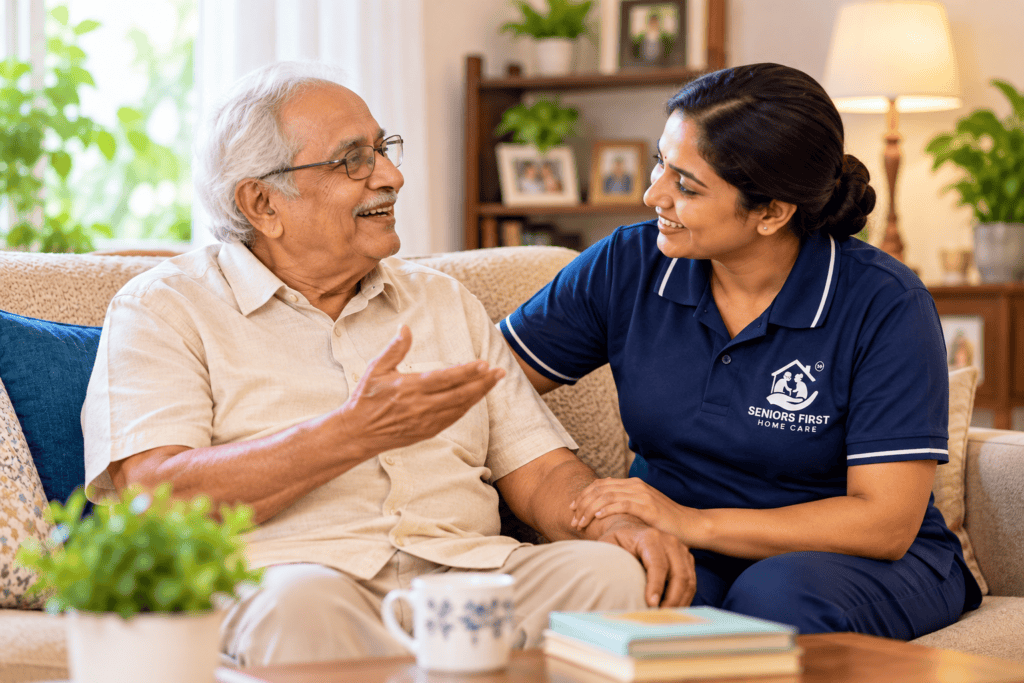
3. Talk to Them Every Day
Talking to an elderly family member is not just about checking their health.
Take time to listen to their:
- Daily experiences
- Concerns
- Preferences
- Feelings
- Needs
Sometimes elderly people may not openly communicate that they are experiencing a problem.
Simply asking “How are you feeling today?” and genuinely listening can help you understand their needs better.
4. Observe Changes in Their Mobility
Pay attention to changes in the way an elderly person walks or moves around the house.
For example:
- Taking longer than usual to walk
- Having difficulty maintaining balance
- Needing more support while walking
- Difficulty getting up from a chair or bed
Do not ignore noticeable changes in mobility.
If you are concerned about a sudden or significant change, consult an appropriate healthcare professional.
5. Make the Home Senior-Friendly
Home safety becomes especially important when elderly people spend time alone.
Some simple precautions include:
- Keep floors dry.
- Remove loose carpets and rugs.
- Use anti-skid mats in the bathroom.
- Ensure adequate lighting at night.
- Keep walking areas free from unnecessary obstacles.
Small changes around the home can help create a safer environment for elderly family members.
What If Family Members Are Busy?
Not every family can have someone at home with an elderly person throughout the day.
Work, business, travel, and other responsibilities can make continuous supervision difficult.
Depending on the elderly person’s needs, professional caregiver support can be a practical option.
A trained caregiver can assist with daily activities such as:
- Personal care
- Mobility assistance
- Feeding assistance
- Hygiene support
- Basic daily care
- Companionship
The level of support should always be based on the individual’s needs and medical requirements.
When Should You Seek Medical Help?
Do not ignore sudden or significant changes in an elderly person’s condition.
Seek appropriate medical attention if you notice symptoms such as:
- Sudden confusion
- Difficulty breathing
- Severe or unusual pain
- A fall or injury
- Sudden weakness
- Loss of consciousness
For emergencies, seek immediate medical assistance.
A Simple Daily Check for Elderly Family Members
You can use these five simple questions as a daily check:
1. Have you eaten?
2. Have you taken your prescribed medicines?
3. Have you had enough water?
4. How are you feeling today?
5. Do you need any help?
These questions are simple, but regular check-ins can help families stay aware of an elderly person’s daily well-being.
A Little Attention Can Make a Big Difference
Elder care is not only about giving medicines, preparing food, or helping with daily activities.
It is also about being present, listening, observing changes, and providing the right support when needed.
If you have elderly parents or family members at home, try to spend some time with them every day.
A little attention can give them a lot of confidence, comfort, and reassurance.
Seniors First Home Care
If your elderly family member needs professional caregiver support at home, Seniors First Home Care provides caregiver placement and home care support in Hyderabad.
Compassionate Care. Comfort at Home.
Service Area: Hyderabad
Website: seniorsfirst.co.in